

Unified Namespace explained – how it works & benefits for industry
Unified Namespace (UNS)
The Unified Namespace (UNS) is an architectural approach that consolidates data from multiple systems into a central, unified structure. This simplifies information exchange and processing in industrial environments, enhances collaboration and enables more efficient decision-making.

Connect & decide with confidence
Unified Namespace: the standard for modern data integration
Unified data – efficient production
In modern industry, connecting machines, equipment, and systems remains a key challenge. Often, disparate data silos exist that:
- Impede the flow of information
- Make it difficult to use data efficiently
- Hinder fast and informed decision-making
The Unified Namespace (UNS) solves these challenges by creating a central, unified data structure, giving access to all relevant information in real time.
Benefits for companies:
- Consolidate data from diverse sources
- Integrate innovative technologies such as Machine Learning and AI more easily into production
- Continuously optimize processes
What is the Unified Namespace?
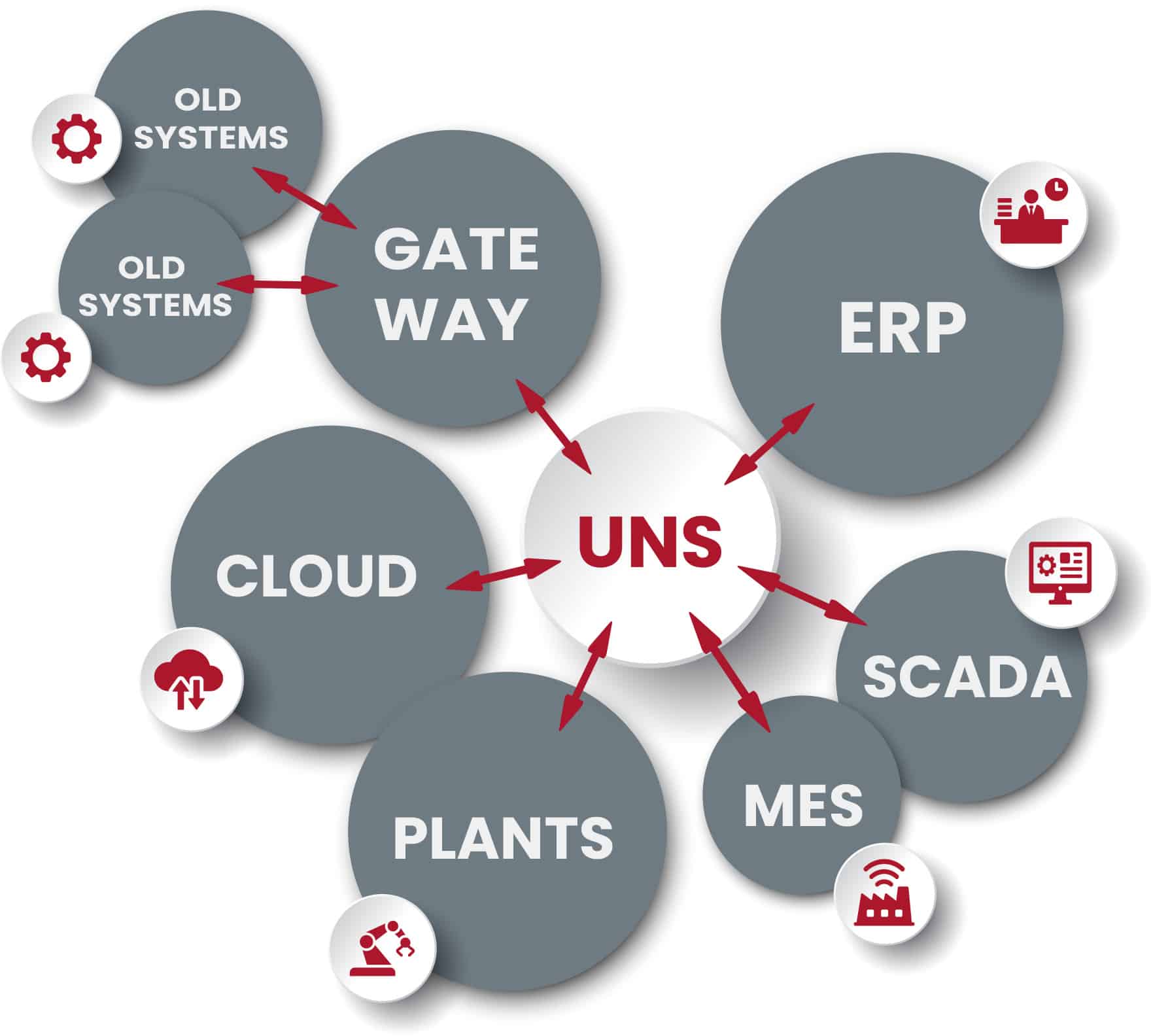
The Unified Namespace (UNS) is a central, unified data structure that brings together data from machines, control systems, and IT applications in a consistent format. It consolidates data from different sources in real time, providing a single source of truth for production processes.
Technically, the UNS relies on IIoT protocols such as MQTT, enabling communication across all systems. Data is collected centrally, organized, and made accessible even to non-IIoT-enabled devices. Machines, sensors, and enterprise applications can subscribe to and use relevant information in real time.
The term Unified Namespace was first coined by Walker Reynolds, an IIoT and Industry 4.0 solution architect recognized as a thought leader in the field.
How does the Unified Namespace work?
The UNS often uses the ISA-95 standard to structure production data hierarchically, ensuring that the UNS reflects actual operational and organizational processes.
It consolidates data from machines, sensors, and enterprise software in real time, standardizes it, and makes it available in a centralized, consistent framework.
Technologies such as IoT platforms, edge computing, and middleware ensure that the data is immediately accessible in a unified format, enhancing interoperability and providing a comprehensive view of production processes.

“A single source of truth” for all company data – users can access the data they need from one central location.

New systems can be quickly integrated into the UNS. Maintenance of existing systems becomes simpler and more cost-effective.

Digitalization projects can be implemented faster, with reduced effort and cost for data collection and standardization.
Technologies Used in the Unified Namespace
A Unified Namespace integrates various technologies to ensure that data is seamlessly accessible and fully usable. The following outlines which technologies can be employed and how the HighByte Intelligence Hub supports and optimizes them. It’s important to note that the technologies listed are not exhaustive; depending on a company’s specific requirements, additional tools—such as advanced analytics, cutting-edge AI solutions, or enhanced security protocols—may also play a role within the Unified Namespace.

Data sources
- Machines and sensors
- Control systems (PLC, SCADA)
- Enterprise software (ERP, MES)
- Existing data storage (SQL, Historian)
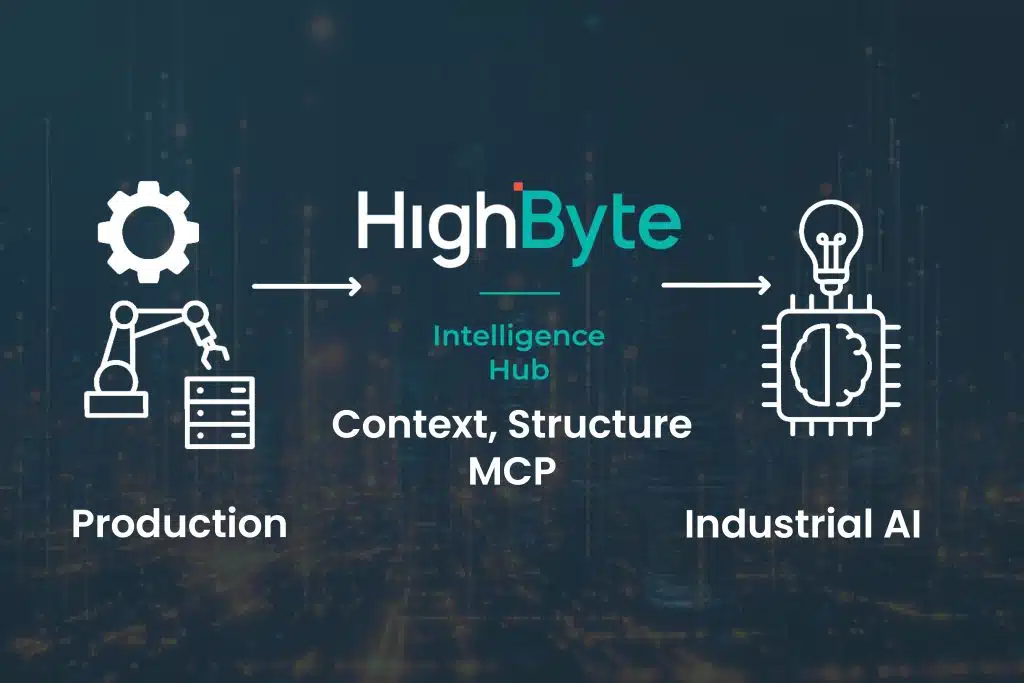
HighByte Intelligence Hub: Enables easy access to real-time and historical data by actively browsing tag structures.

IoT Platforms
- IoT platforms are data hubs that collect information from various sources, ensuring that the data is consistently available.
HighByte Intelligence Hub: Polls or triggers events from diverse sources, normalizes data, and provides it contextually based on predefined models.

Edge computing
- Processes and analyzes data close to the source (e.g., directly at the machine) before feeding it into the UNS. This reduces latency and enhances real-time communication.
HighByte Intelligence Hub: Filters and standardizes data at the source, modeling it according to predefined objects and forwarding only relevant data.

Middleware
- Acts as a bridge between legacy systems or unconventional communication protocols, enabling access to their data and information.
- Acts as an intermediary between various systems and the UNS, facilitating the integration of non-IIoT-enabled systems by appropriately processing their data.
KEPServerEX: Standardizes data communication and exposes it via OPC UA
HighByte Intelligence Hub: Actively browses tag lists from KEPServerEX for efficient integration

Communication Protocols (MQTT, OPC UA, REST)
- In industry, new types of communication have emerged and will continue to evolve, driven by specific requirements and regulations. Each communication protocol serves a distinct purpose, making it indispensable.
HighByte Intelligence Hub: Supports all major protocols and ensures compatibility with future standards.

Data Standardization & Modeling
- Encompasses all rules, standards, and structures that ensure data is consistent and well-organized. This guarantees a unified understanding of the data across all levels and facilitates its use across different systems.
HighByte Intelligence Hub: Provides advanced data modeling with standardized objects for clear, interpretable data structures.

Central data structure
- Stores all data collected in the UNS. This central structure serves as the “Single Source of Truth” for the entire organization.
HighByte Intelligence Hub:ensures correct and consistent management of all data within the UNS.
Traditional Architecture vs. Unified Namespace
The traditional industrial architecture, developed in the 1990s, is based on a hierarchical, pyramid-shaped structure. In this setup, the different levels—from the cloud down to the PLC—communicate through point-to-point connections. While effective for many years, this approach is increasingly reaching its limits in modern industry. The strict separation of hierarchy levels often traps data in isolated silos, making it difficult to access and use efficiently.
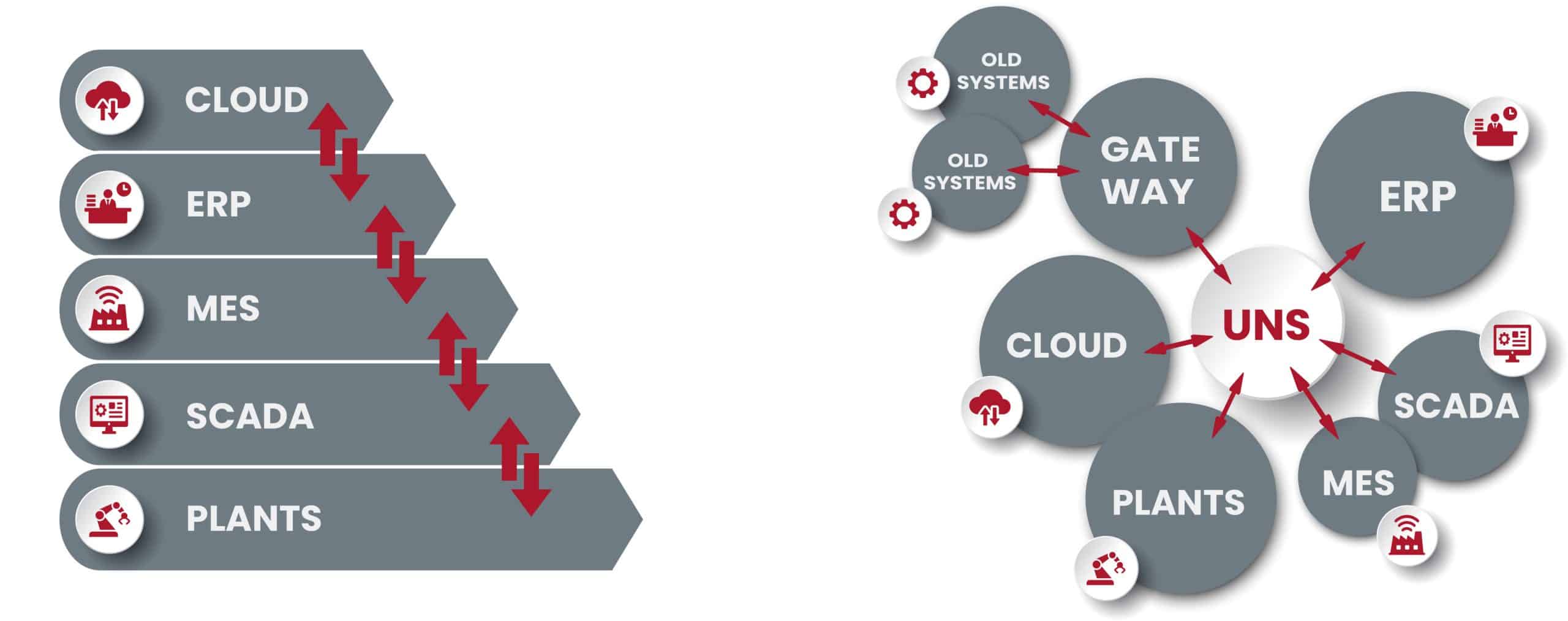
The Unified Namespace (UNS) provides a modern solution that addresses these challenges using a hub-and-spoke approach. Instead of leaving data in isolated silos, the UNS consolidates all data into a central, unified structure accessible to all systems. This increases data availability, reduces network load, and significantly simplifies system integration.
| Aspect | Traditional Architecture | Unified Namespace (UNS) |
|---|---|---|
| Network Structure | Hierarchical pyramid with point-to-point connections | Central, unified hub-and-spoke |
| Data Availability | Limited, siloed, delayed | High, real-time, consistent across systems |
| Scalability | Poor: complexity rises with new systems | Good: data published once and used multiple times |
| Cost | High maintenance and expansion effort | Lower due to reduced complexity and better scalability |
| Data Compatibility | Frequent format issues | Standardized formats for easier integration |
| Flexibility | Changes in one layer affect the entire system | High: systems can be integrated independently |
| Network Load | High, many point-to-point connections | Lower, centralized publishing and subscription |
Applications of the Unified Namespace (UNS)
The Unified Namespace (UNS) is a central component of modern, scalable industrial data architectures. It is used across various areas to unify complex data structures and make them easily accessible:
- Standard Naming Conventions: UNS employs standardized naming conventions to ensure consistent and understandable representation of data. This simplifies data analysis and processing.
- UDT (User-Defined Types): UNS supports user-defined data types tailored specifically to a company’s requirements, allowing flexibility for unique industrial setups.
- Realtime Analytics and Reporting: UNS enables real-time analysis of production data and the generation of reports, allowing immediate response to changes in production processes.
Conclusion
The Unified Namespace (UNS) is a key component of digital transformation, enabling the integration of large volumes of data in real time and providing the foundation for optimized production processes and increased efficiency. By consolidating all relevant information in a centralized, standardized structure, UNS ensures consistent and accessible data, allowing companies to respond more quickly to market changes.
Furthermore, UNS facilitates the seamless integration of modern technologies such as artificial intelligence and machine learning by providing the reliable, structured data these systems require. This combination of enhanced efficiency and technological flexibility makes the UNS an indispensable building block for future-ready, scalable production processes.