

Make unstructured production data systematically usable
The HighByte Intelligence Hub transforms unstructured production data into reliable information that can be systematically used directly in Power BI, AI and enterprise IT systems.
Free Trial





What is HighByte Intelligence Hub?
Your Platform for Managing Industrial Data for Analytics & AI
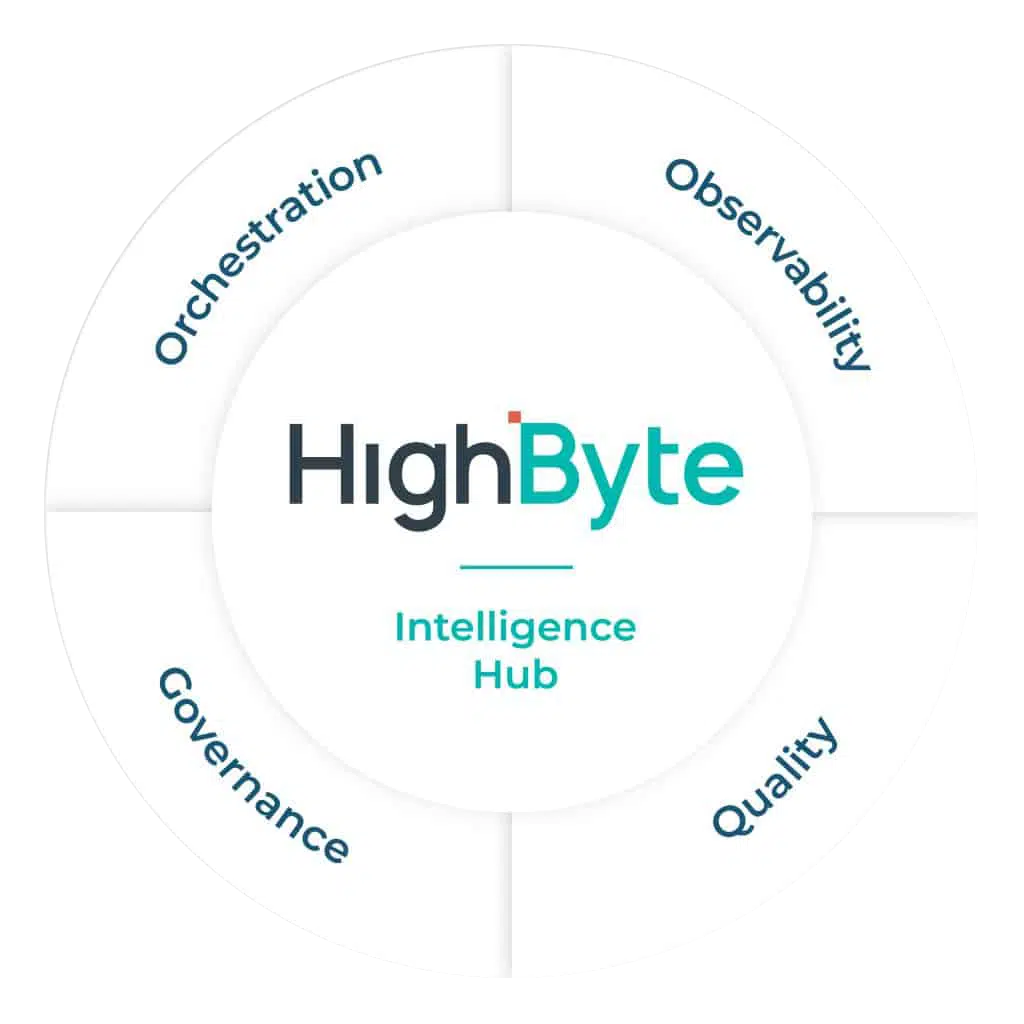
The Intelligence Hub is a DataOps solution specifically designed for industrial environments. The platform unlocks unstructured data from machines and systems across the enterprise and makes it usable. It leverages structured data modeling and secure integration, from the edge to the cloud, scalable and fully controlled.
With the Intelligence Hub, you can:
- Connect IT and OT systems through a unified data model
- Standardize your data via the Unified Namespace
- Accelerate analytics, machine learning, and reporting initiatives

Get Successfully Started
with Industrial DataOps
Industrial companies need contextualized data and a digital architecture that grows with them.
The HighByte Intelligence Hub connects OT and IT systems, models and standardizes data, and delivers it in real time for analytics, AI, and business applications—from the edge to the cloud.
Learn how the HighByte Intelligence Hub helps companies overcome these challenges.
Common reasons why data cannot be effectively used
Is your production data hard to access?

Inconsistent data
Different machines, systems, and sites “speak different languages.” Without common data models and standardized naming, comparisons are difficult and insights can’t be used across locations.

Insufficient IT/OT integration
Point-to-point connections create bottlenecks. Small changes can disrupt production data flows, making scaling and adaptation challenging.

Slow, manual data preparation
Engineers spend excessive time cleaning, structuring, and contextualizing data before it can be used in tools like Power BI.

No AI or analytics projects
Without standardized, high-quality data pipelines, analytics and AI initiatives stall. Pilot projects cannot be scaled across sites or systems.
Free 2-Hour Trial
Download the HighByte Intelligence Hub directly from the HighByte website. Experience how quickly industrial data can be connected, modeled, and processed without programming and without impacting ongoing production.
- The software can be reset every 2 hours for full feature testing.
- Available for Windows, macOS, and Linux.
How does the HighByte Intelligence Hub work?
Structured Data for a Unified Enterprise-Wide Foundation
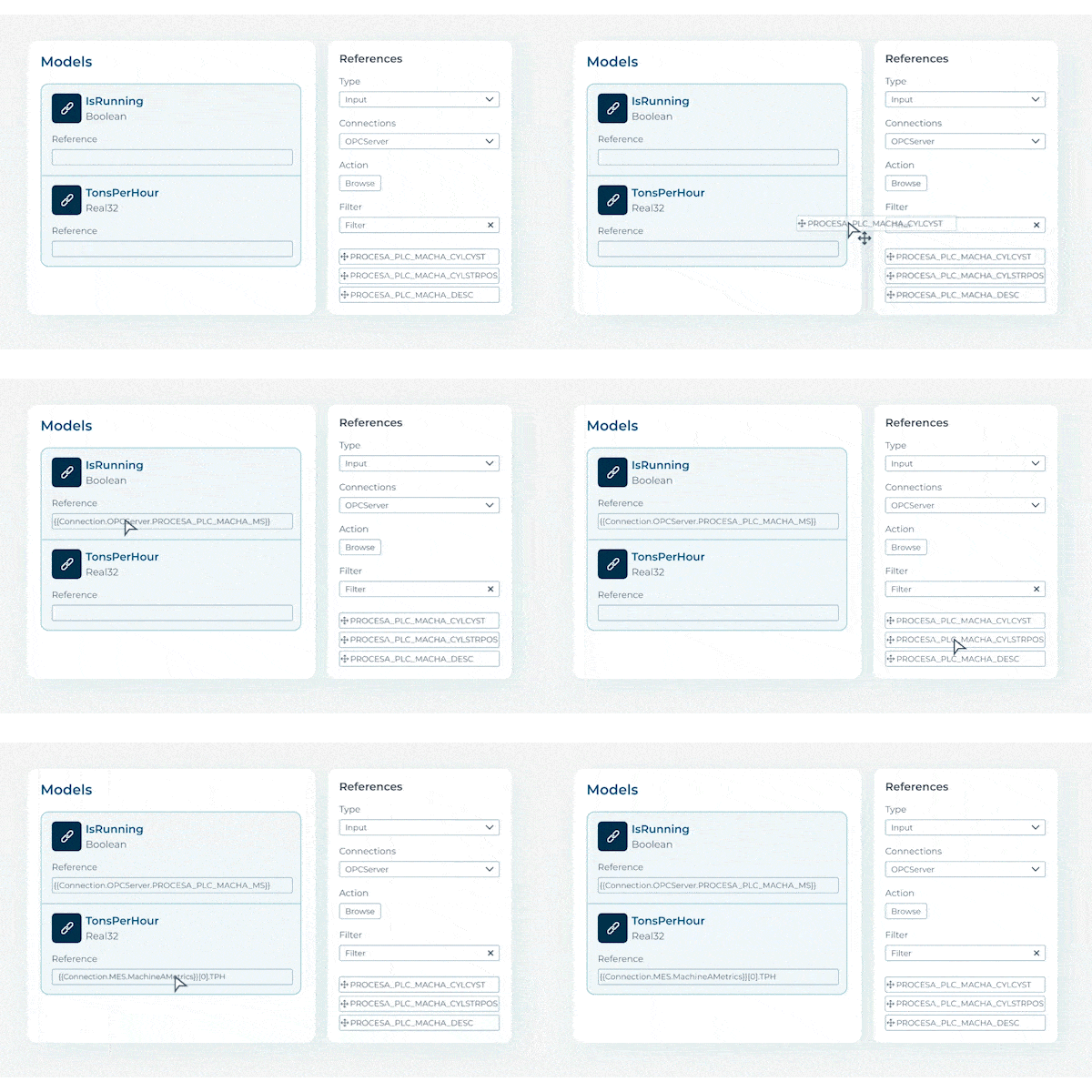
Data modeling transforms machine data from raw availability into actionable value.
Without context, even high-quality data loses value. The Intelligence Hub transforms raw shop floor signals into structured, meaningful information. OT and IT teams can finally operate on the same reliable data foundation.
The Intelligence Hub helps with:
- Consistent data models across assets and sites
- Clean, contextualized information for analytics and AI
- Data preparation directly on the shop floor instead of post-processing
- An interface for OT teams to work without programming
A Complete Unified Namespace (UNS) Solution
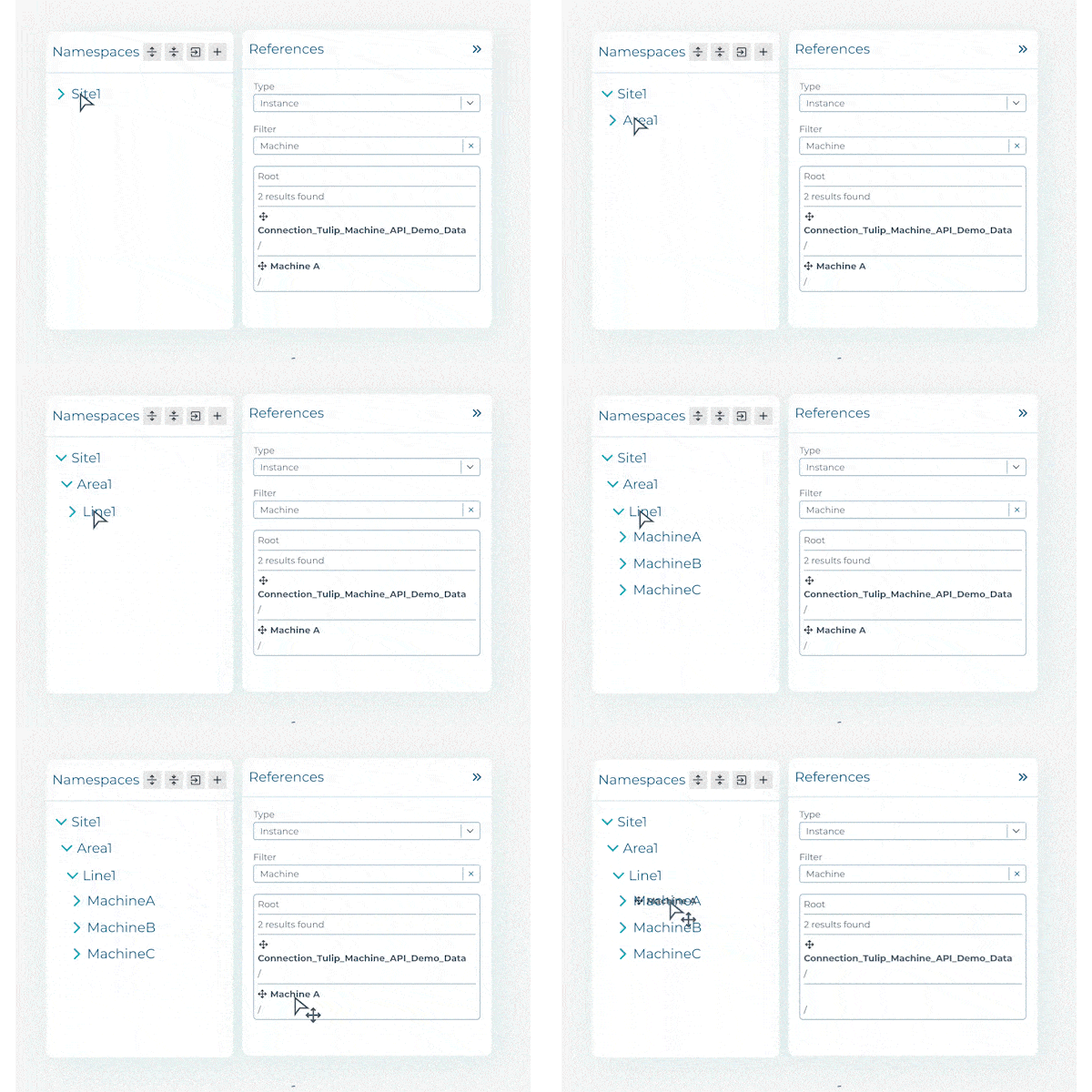
As system landscapes, sensors, and teams grow, data quickly becomes overwhelming. A Unified Namespace provides a central structure where data is organized, always available, and consistently up to date.
The Intelligence Hub helps with:
- A single, reliable source of industrial real-time data
- Less effort on integrations, more focus on using data
- Unified architecture for IT/OT collaboration
Deliver Data to Any Application
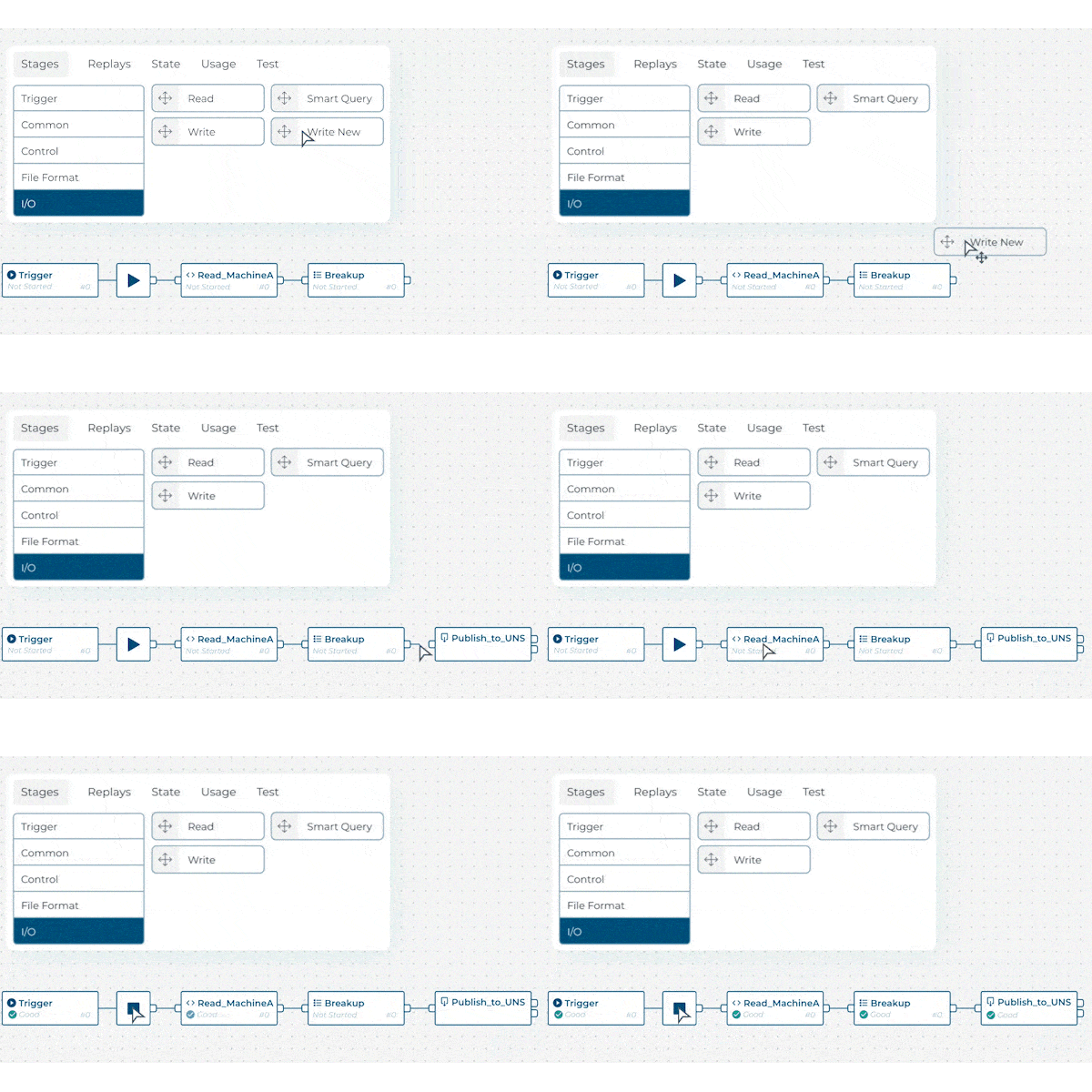
Each system expects data in a different format. MES, cloud platforms, and analytics tools all have unique requirements. The Intelligence Hub’s data pipelines automatically prepare modeled data for each target system without fragile scripts or custom interfaces.
The Intelligence Hub helps with:
- Data structures tailored to each system’s needs
- Stable pipelines for continuous data delivery
- Automated data flows between OT and IT without manual rework
Concrete Results with the Intelligence Hub
8 months
payback
„Faster production insights and less manual data collection significantly improved equipment utilization.”
HighByte customer, Aerospace
4× faster
integration projects
„Fewer unplanned repairs and downtime. Post-processing effort is also reduced—critical for us.”
HighByte customer, Logistics
60% more
employees with access to analytics
„What used to take 1–2 weeks now happens in a single day. Integrated middleware and transformation functions accelerate the entire process.”
HighByte customer, Plastics
Practical Implementation Examples
…Lindt & Sprüngli
Scaling digital initiatives across multiple sites is often a challenge. Lindt & Sprüngli leveraged a clear data strategy, end-to-end OT/IT integration, and modern platforms like the HighByte Intelligence Hub to achieve sustainable digital success.
…SKF
See how SKF made its OT data accessible and now uses it for data-driven decisions. A practical example of successful digital transformation.
Water & Wastewater

Anglian Water uses the HighByte Intelligence Hub as a central, scalable architecture to unify data from multiple systems.
Energy

Siemens Gamesa uses the HighByte Intelligence Hub to standardize data across sites and build a scalable Unified Namespace that aligns people, processes, and technologies.
Life Science

Catalent uses the HighByte Intelligence Hub to standardize bioreactor and lab data in a scalable Unified Namespace, supporting analytics, GMP compliance, and real-time customer insights.
Food & Bev

Gousto uses the HighByte Intelligence Hub to curate manufacturing data and model it in a scalable Unified Namespace, enabling AWS-based analytics and improving operational efficiency.
Frequently Asked Questions:
HighByte Intelligence Hub connects OT and IT through standardized interfaces.
It acts as a bridge between Operational Technology (OT) and Information Technology (IT), integrating with PLCs, SCADA systems, historians, MES, ERP, and cloud platforms. Using native connectors such as OPC UA, Modbus, MQTT, REST, and SQL, data can be modeled, mapped, and contextualized—without the need for custom programming. This enables consistent and scalable OT/IT integration across the entire enterprise.
HighByte supports all common deployment models.
The Intelligence Hub can run on-premises at the edge, in virtual machines or containers, as well as in cloud environments such as AWS, Azure, or Google Cloud. Many organizations adopt hybrid approaches: data is captured and modeled at the edge and then delivered to cloud analytics platforms. This allows for an optimal balance of performance and data governance.
HighByte provides a complete solution for Unified Namespace (UNS) architectures.
A Unified Namespace (UNS) establishes a centralized, structured data layer for industrial applications. The HighByte Intelligence Hub simplifies the implementation of a UNS by modeling and contextualizing data before it is published. Data is delivered via MQTT or Sparkplug B, and an integrated MQTT broker is available for local namespaces. This enables organizations to efficiently build and operate a scalable industrial data infrastructure.
. -> Unified Namespace explained – How It Works and Its Benefits for Industry
HighByte can operate as both an MQTT publisher and subscriber.
The Intelligence Hub can function as both an MQTT publisher and subscriber, connecting to brokers such as HiveMQ, EMQX, or Mosquitto, or using its built-in broker for local deployments. Structured payloads—such as JSON or Sparkplug B—are reliably published to defined topics.
This enables stable, event-driven industrial data exchange.
. -> MQTT – lightweight publish/subscribe messaging protocol
HighByte supports the open Model Context Protocol (MCP).
MCP is an open standard for connecting data models to AI and automation frameworks. With MCP, HighByte pipelines and models can be exposed as context-aware tools for AI systems. Industrial data is made securely available for modern AI applications—while maintaining full control over the source systems. -> Model Context Protocol (MCP) in industrial environments
HighByte relies on proven security mechanisms for industrial data.
The Intelligence Hub supports encrypted communication via TLS/SSL for MQTT and HTTPS for REST interfaces. In addition, it provides role-based user management and authentication via SAML or Active Directory/LDAP. Configurations can be securely transferred between environments.This ensures that common OT/IT governance and security requirements are reliably met.
HighByte offers a flexible, subscription-based licensing model.
The software is available as an annual subscription, which includes unlimited connections, data models, and pipelines. All core features—including the integrated MQTT broker, OPC UA connectivity, and UNS functionality—are included in the price. This enables simple and scalable standardization of your industrial data platform across multiple sites.
HighByte offers evaluation and PoC licenses that allow the Intelligence Hub to be tested in your own environment.
HighByte offers evaluation and PoC licenses that allow the Intelligence Hub to be tested in your own environment. Real-world data integrations, UNS designs, and MQTT communications can be evaluated in practice. This provides technical confidence and accelerates subsequent deployment within your organization.
Understanding DataOps: What it is and why it has become indispensable
How to kick off your DataOps journey? Download the 10-step guide.