

Cutting Cloud Costs by Shifting DataOps to the Edge
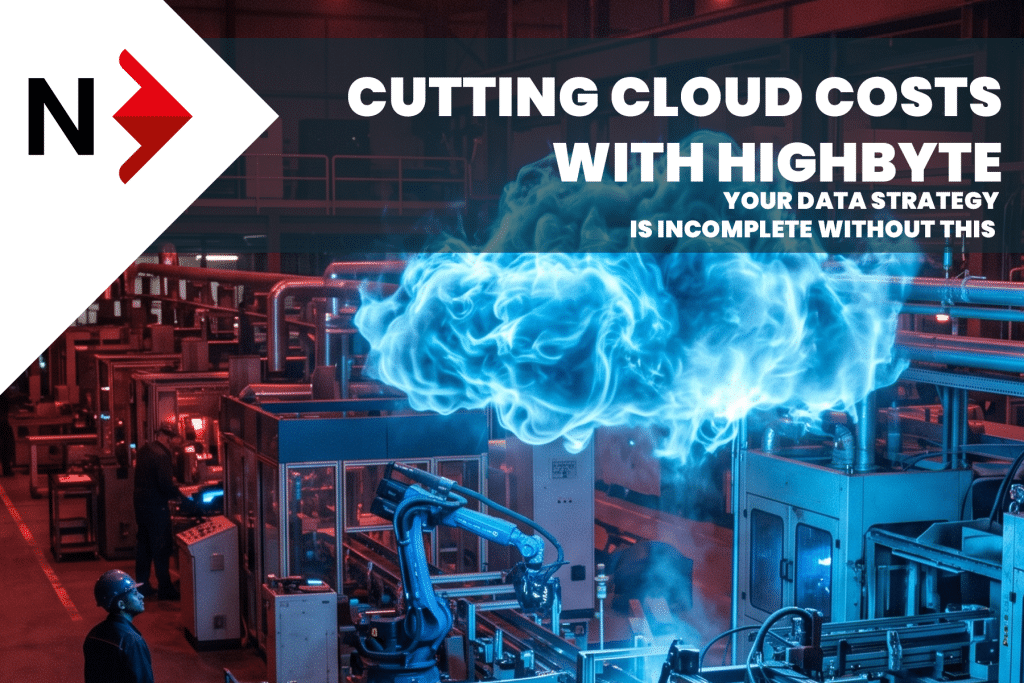
Many digital transformation projects begin with a simple blueprint: collect every available machine signal from the factory floor and push it straight to cloud storage platforms such as Microsoft Azure, AWS, or Google Cloud. The underlying assumption was that cloud computing offered infinite scalability at low costs, making it the ideal location to clean, structure, and store industrial datasets.
However, as connected equipment multiplied and sample rates increased from minutes to milliseconds, the financial reality began to sink in. Cloud providers bill customers based on data ingress volume, API transaction frequency, database storage tiers, and the raw computational power required to parse unconditioned payloads. Piping millions of raw tags per hour into cloud environments creates a recurring financial drain that grows alongside every new sensor added to the production network.
Why High-Frequency Telemetry Overwhelms Cloud Architectures
Industrial operational technology networks run on high-frequency signals. Programmable Logic Controllers, vibration monitors, temperature sensors, and power meters generate continuous telemetry to ensure safe, stable machine operation. A single high-speed packing line can easily output tens of thousands of data points every second.
When these signals are routed directly into cloud telemetry hubs without prior filtering, three distinct cost multipliers emerge:
- Bandwidth and Network Overhead: Constant streaming requires substantial bandwidth. In remote or bandwidth-constrained facilities, paying to transmit redundant telemetry strains local infrastructure and inflates network service contracts.
- High-Frequency Transaction Charges: Most cloud platforms charge per message or per API invocation. Streaming ten thousand discrete readings per second incurs millions of API transactions per day, long before any value is extracted from the data.
- Heavy Cloud Post-Processing: Unfiltered machine data lacks context. Cloud data engineers must construct complex serverless functions, database queries, and transformation pipelines to clean, filter, and structure raw data. Cloud compute resources are billed by execution time and memory allocation, meaning that every second spent converting raw numbers into usable formats incurs ongoing operational costs.
The Edge DataOps Alternative
A far more sustainable approach involves moving data operations closer to the physical equipment. Shifting data modelling, conditioning, and aggregation from cloud environments to the local network edge resolves the cost spiral before data ever leaves the facility.
Edge DataOps software such as HighByte Intelligence Hub sits between physical OT devices and enterprise destinations. Rather than functioning as a simple pass-through pipe, an edge solution acts as an intelligent traffic manager and contextualisation engine. By conditioning operational data on local gateway hardware or virtual machines within the plant, organisations ensure that only structured, valuable information reaches cloud storage.
Three Core Edge Techniques to Reduce Ingestion Bills
Implementing DataOps at the edge lowers cloud expenditures through three practical data transformation techniques.
1. Filtering and Deadbanding
Industrial equipment frequently reports steady-state values for long periods. A furnace maintaining a stable temperature of 180 degrees Celsius may transmit identical readings every 100 milliseconds. Pushing thousands of static numbers into the cloud provides zero incremental analytical insight while steadily increasing transaction fees.
By applying deadbanding logic at the edge, HighByte Intelligence Hub evaluates incoming signals in real time and suppresses identical values. A new data point is published only when the value breaches a defined threshold or after a maximum safety heartbeat interval expires. This single configuration choice typically eliminates between 60% and 80% of unnecessary message volume without compromising analytical precision.
2. Local Aggregation and Summarisation
High-speed vibration sensors and current transducers require high sampling frequencies to detect mechanical wear, yet long-term asset health algorithms only require aggregated metrics such as mean, peak, or standard deviation over five-minute windows.
Edge DataOps software calculates these statistical summaries locally. Rather than transmitting six thousand raw samples every minute, the edge node computes the minimum, maximum, and average values over that period and sends a single enriched JSON payload to the cloud platform. The cloud receives precisely the data required for trend monitoring, while ingestion volume drops by several orders of magnitude.
3. Contextualisation at Source
Raw PLC addresses like Tag_1042 carry no inherent meaning. In traditional cloud architectures, cloud databases ingest Tag_1042 = 42.5 and then run secondary lookup jobs to join that number with asset management tables, production schedules, and engineering unit descriptions.
HighByte Intelligence Hub performs this contextualisation locally by binding static equipment metadata, active MES batch numbers, and engineering units to the live signal at the edge. The resulting message arrives in the cloud fully structured as a standard model containing asset name, location, operational state, and quality status. Cloud storage systems can ingest and query the payload directly without running costly secondary transformation functions.
Aligning Financial Control with Operational Flexibility
Moving data operations to the edge delivers immediate financial benefits while strengthening operational control across the organisation.
Predictably lower cloud infrastructure bills allow digital transformation teams to protect project budgets and demonstrate clear return on investment to executive stakeholders. Money previously allocated to cloud ingestion and compute overhead can be redirected into predictive analytics, user dashboards, and operational improvements.
Furthermore, local edge processing improves system resilience. If an internet connection or cloud service experiences downtime, edge nodes continue operating locally, buffering critical datasets and maintaining plant-level communications. Once connectivity restores, edge DataOps engines resume transmission without loss of contextual integrity or system overload.
Additionally, OT and automation teams regain ownership over data governance. Rather than relying on cloud developers to modify data structures in distant database pipelines, plant engineers can adjust schemas and data flows locally using standard software tools.
Building a Sustainable Industrial Data Strategy
The long-term success of industrial digital initiatives depends on maintaining balance between local control and cloud capabilities. The cloud excels at macro-level analytics, long-term trend storage, multi-site benchmarking, and machine learning model training. The edge excels at real-time data handling, contextual enrichment, and protocol translation.
By deploying HighByte Intelligence Hub as an edge DataOps layer, manufacturing enterprises establish a clean boundary between plant floor machinery and enterprise systems. Filtering noise, summarising high-speed signals, and framing data in proper context at the local level ensures that cloud resources handle clean, actionable intelligence rather than raw background noise. This operational shift lowers ingestion bills, simplifies system architecture, and sets a firm foundation for scalable digital growth.