

The Governance Foundation: Building an AI-Ready Industrial Data Fabric with Velotic
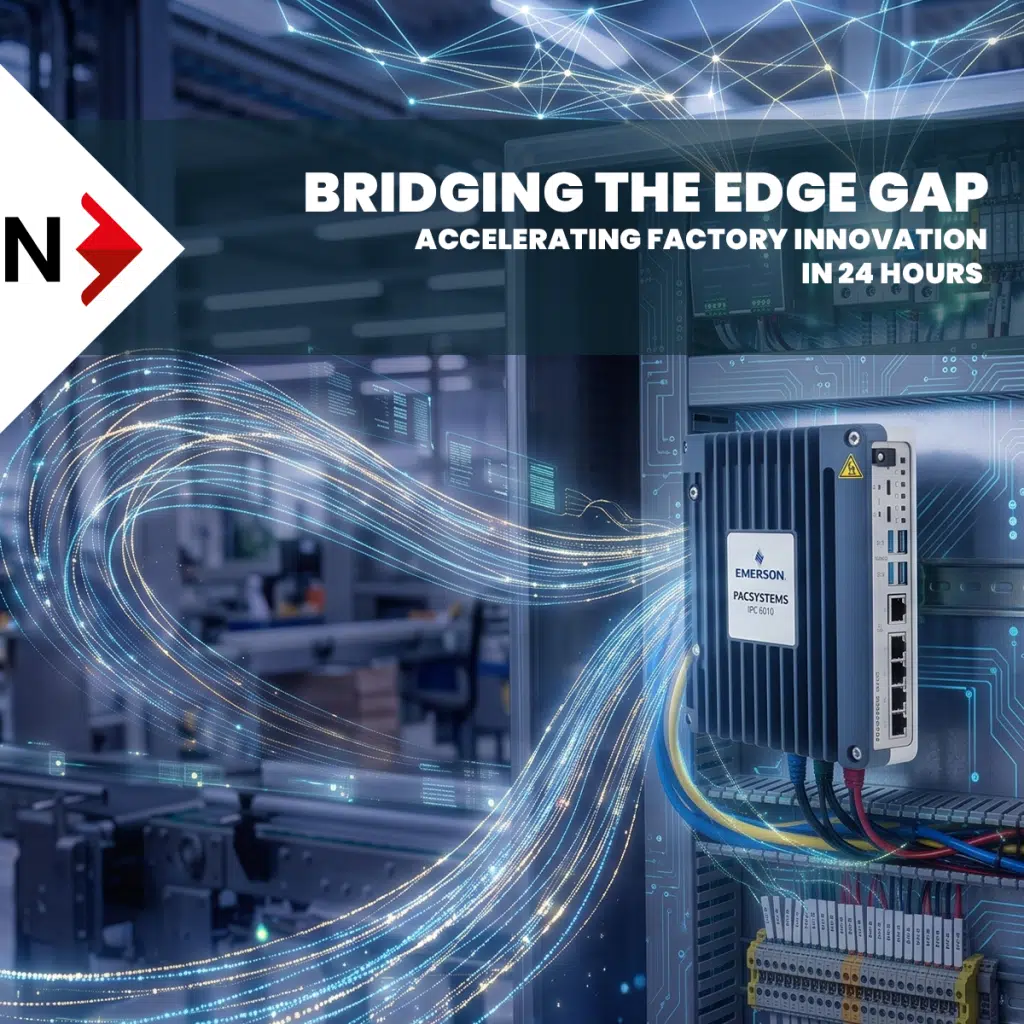
The launch of Velotic has fundamentally restructured the landscape of industrial automation software. By bringing together the industry-leading connectivity of PTC Kepware, the operational execution of GE Vernova Proficy, and the rapid application deployment of PTC ThingWorx under a single, unified organisation, Velotic provides a powerful technology stack designed to scale smart manufacturing.
However, technology alone cannot deliver on the promise of the fourth industrial revolution. For manufacturing, utility, and process industries across the United Kingdom and Ireland, the real determinant of digital transformation success is data governance. Without a robust operational technology (OT) data strategy, the influx of raw information from connected assets will lead to administrative bottlenecks rather than operational intelligence.
At Novotek UK & Ireland, we have spent decades helping industrial organisations store, structure, and transfer data into actionable knowledge. In this article, we explore why data governance is the essential foundation of the Velotic era, and how UK manufacturers can prepare their architectures for next-generation industrial artificial intelligence (AI).
Understanding Industrial Data Governance in the OT Domain
Industrial data governance refers to the formal framework of roles, rules, standards, and processes that ensure operational data is secure, reliable, and highly usable. Unlike IT data governance, which often focuses on database structures, user access privileges, and regulatory privacy compliance, OT data governance prioritises operational integrity, real-time availability, and semantic context.
On a typical plant floor, data is generated by thousands of disparate physical devices, including programmable logic controllers (PLCs), sensors, and legacy instrumentation. This data is often isolated in proprietary silos and lacks context. A raw temperature reading of “98.4” means very little without knowing the measurement unit, the specific machine it came from, and the acceptable operational thresholds.
OT data governance provides the structure needed to translate these raw signals into meaningful datasets. This standardisation is vital when preparing for advanced analytics or machine learning models, which require clean, structured data to deliver accurate predictions.
The Velotic Portfolio: A New Era of Unified OT Architectures
The Velotic suite offers a comprehensive software stack that spans every layer of the industrial data journey. The integration of these distinct technologies under one roof presents a unique opportunity to standardise data flows across the enterprise.
| Technology | Legacy Provider | Core Operational Function |
| Kepware | PTC | Industrial connectivity, universal protocol translation, and OT-to-IT data integration |
| Proficy | GE Vernova | High-performance HMI/SCADA, Manufacturing Execution Systems (MES), and historical data storage (Historian) |
| ThingWorx | PTC | Industrial Internet of Things (IIoT) application development and digital twin orchestration |
While these platforms are highly capable as individual components, their true value is unlocked when they are treated as a unified, cohesive ecosystem. The objective for modern manufacturers is to establish a continuous, governed pipeline where data flows seamlessly from the factory floor to the boardroom.
Three Pillars of Modern OT Data Governance
To build a sustainable digital transformation programme, manufacturers must address three core areas of industrial data management.
1. Data Standardisation and the Unified Namespace (UNS)
The first pillar focuses on standardising how data is structured and named. Different machines and software systems frequently use conflicting naming conventions for similar parameters, such as “Temp_1” versus “ZoneA_Temperature.”
Using Kepware for connectivity allows organisations to normalise these diverse protocols into a single, cohesive framework. By implementing a Unified Namespace (UNS), a software architecture that serves as a single source of truth for all real-time operational data, companies can ensure that every system consumes data using the same semantic structure. This consistency is essential when scaling analytical models across multiple production lines or regional manufacturing sites.
2. The Philosophy of System Stewardship
Sustainable data governance requires long-term human ownership. At Novotek, we promote the concept of system stewardship. This philosophy encourages manufacturing teams to take active, long-term responsibility for their digital systems rather than treating digitalisation as a series of one-off, disconnected capital projects.
When internal teams are empowered to act as stewards, they maintain the integrity of data models as operations evolve over time. They ensure that newly installed machinery is integrated into the governance framework correctly, keeping documentation accurate and preserving the return on investment of the software suite.
3. Bridging the OT-IT Security Divide
Industrial data governance must also protect operational environments from external risks. Historically, OT networks were physically isolated from corporate IT networks, a concept known as “air-gapping.” Modern digital initiatives require secure data exchange between these two domains, which increases the potential attack surface.
A strong governance policy defines precise protocols for data transit. By using Kepware’s secure connectivity features alongside Proficy’s robust access controls, organisations can securely transmit operational data to IT systems without exposing critical control infrastructure to cyber threats. Governance rules must explicitly define who can access specific datasets, which systems are authorised to write commands back to the plant floor, and how security patches are verified and deployed.
Designing an AI-Ready Data Fabric with Novotek
The ultimate goal of OT data governance is the creation of an integrated, AI-ready data fabric. Industrial AI applications, such as predictive maintenance, dynamic scheduling, and energy optimisation, depend entirely on the quality of the underlying data. Implementing AI models on poorly governed, unstandardised data will yield unreliable insights and increase operational risk.
As the primary channel partner for the Velotic portfolio in the UK and Ireland, Novotek is uniquely positioned to help manufacturers navigate this transition. Our approach focuses on delivering vendor-agnostic, actionable intelligence assessments. We collaborate with your engineering and IT teams to map your existing data flows, identify governance gaps, and establish a clear, prioritised roadmap.
Through hands-on consulting, system architecture design, and comprehensive technical training, we help UK manufacturers build the internal capabilities needed to maintain secure, compliant, and highly optimised operational environments.
Unlocking the True Value of the Connected Factory
The consolidation of Proficy, Kepware, and ThingWorx under the Velotic brand is a significant milestone for the industrial software sector. It provides the technical tools needed to bridge the gap between physical machinery and digital intelligence.
Success in digital manufacturing depends on how effectively an organisation governs its operational data. By prioritising standardisation, establishing robust system stewardship, and securing the OT-IT boundary, manufacturers can transform raw industrial signals into a valuable strategic asset.
To learn more about how Novotek UK & Ireland can help you build an AI-ready industrial data strategy for your plants, contact our consulting team today.