

The Urgency Behind Industrial Data Ops
The race for Industrial AI is no longer a forward-looking strategy for the next decade. It is an active battlefield. Across the manufacturing and process industries, organisations are rushing to deploy generative AI, predictive maintenance algorithms and autonomous agents to unlock new levels of efficiency, reduce unplanned downtime and combat a shrinking skilled workforce.
Yet, a harsh reality is setting in: the vast majority of these projects are failing, stalling or blowing through budgets.
The bottleneck is not the AI models themselves because advanced machine learning algorithms have become practically democratised. The trap lies entirely within the data architecture. Industrial operations data is notoriously fragmented, locked away in isolated silos and completely devoid of the structural context AI needs to function.
If your organisation is attempting to build an AI strategy on top of raw, unconditioned operational technology (OT) data, you are building on quicksand. To survive and lead in this landscape, manufacturers must shift their focus immediately to Industrial DataOps. This is the critical, missing framework required to curate, model and deliver AI-ready data across the enterprise.
At Novotek, we see the architectural friction points every day. Right now, the definitive tool to bridge this gap and accelerate your AI readiness before the competition outpaces you is the HighByte Intelligence Hub.
The Reality of Industrial Data: It Is Not Created AI-Ready
To understand the urgency, we must look at the structural nightmare that defines typical factory-floor data. A single production facility houses a chaotic ecosystem of PLCs, SCADA systems, Historians, MES and ERP platforms. They communicate over a patchwork of protocols, such as OPC UA, Modbus, MQTT and SQL, with each speaking a completely different language.
Worse still, the data signals generated at the Edge are entirely esoteric. A raw tag read like FT_102_PV: 42.7 means something to the specific control engineer who programmed that line ten years ago. To an AI agent or a cloud-based data science model, it is meaningless noise.
For an AI model to successfully deliver actionable intelligence, it demands data characterised by four strict pillars:
- Accessibility: Is the data seamlessly exposed, or is it trapped behind proprietary networks and brittle, custom-coded API integrations?
- Completeness: Are there massive data gaps, stale values or unvalidated anomalies that will skew or corrupt your machine learning training sets?
- Standardisation: Is the structure of a pump or a temperature profile identical across Line 1, Line 5 and an entirely separate facility in another country?
- Contextualisation: Does the raw telemetry carry essential metadata, such as asset location, model type, current batch number and operational thresholds?
Traditionally, organisations have tried to solve this by dumping raw data into a cloud data lake and tasking expensive data scientists with cleaning, restructuring and stitching it together. This approach is dead on arrival. It is slow, incredibly expensive in cloud processing costs and fundamentally detaches data preparation from the domain experts who actually understand the plant floor.
The Architecture of Urgency: Enter Industrial DataOps
Industrial DataOps is the orchestration of people, processes and technology to securely deliver trusted, ready-to-use data to those who require it. It establishes a governable abstraction layer directly between your OT edge and your IT or cloud destinations.
Instead of treating data integration as a series of rigid, one-off engineering projects, DataOps treats data as a scalable product.
[ Plant Floor Edge ] ---> [ HighByte Intelligence Hub ] ---> [ AI / Cloud Systems ]
  - PLCs & Sensors           - No-Code Connections             - Databricks / Snowflake
  - SCADA & MES              - Standardisation & Modeling      - Predictive Analytics
  - Legacy Historians        - Unified Namespace (UNS)         - Autonomous Agents
By deploying a dedicated DataOps solution at the Edge, manufacturers can condition and model data at the source. This ensures that the moment data leaves the factory floor, it is already clean, harmonised and fully optimised for consumption by advanced analytical engines.
The financial and operational risks of delaying this architectural shift are staggering. Every month spent troubleshooting broken integrations, writing custom script fixes or feeding bad data to faulty AI models represents lost market share and wasted capital.
HighByte Intelligence Hub: The Engine for AI Readiness
As industrial digitalisation experts, Novotek looks for solutions that scale without adding operational friction. The HighByte Intelligence Hub is purpose-built to eliminate the data bottlenecks preventing true AI adoption. It provides a robust, no-code environment that empowers OT teams to curate data pipelines seamlessly.
1. Codeless Integration and Conditioning
The Intelligence Hub features over 40 native connectors to seamlessly bridge IT and OT systems. Rather than maintaining brittle, custom-coded scripts, teams use a graphical interface to orchestrate data flows. Crucially, it allows for edge-level conditioning by filtering data through deadbands to eliminate sensor jitter, calculating rolling averages or min/max metrics, and instantly alerting on stale or bad-quality data before it ever hits an AI pipeline.
2. Reusable, Object-Oriented Data Modelling
With HighByte, you can represent physical machines, processes and entire systems as intelligent data models. Instead of mapping thousands of individual, cryptic tags, you create a standardised asset model, such as a standard template for a CNC machine or a centrifugal pump. You can then instantiate hundreds of these assets in minutes. This adds critical metadata and harmonises units of measure, providing the explicit structural context that traditional and generative AI models require to interpret operational reality accurately.
3. Constructing the Unified Namespace (UNS)
True AI readiness requires moving away from rigid ISA-95 hierarchical data silos toward an agile, event-driven architecture. The HighByte Intelligence Hub acts as the foundational engine for constructing a Unified Namespace (UNS). By modelling and contextualising data before publishing it to centralised MQTT brokers like HiveMQ or EMQX, HighByte establishes a single, real-time source of truth. Subscribing AI applications, business systems and operators can immediately consume perfectly structured data on demand.
4. Purpose-Built Tools for the AI Era
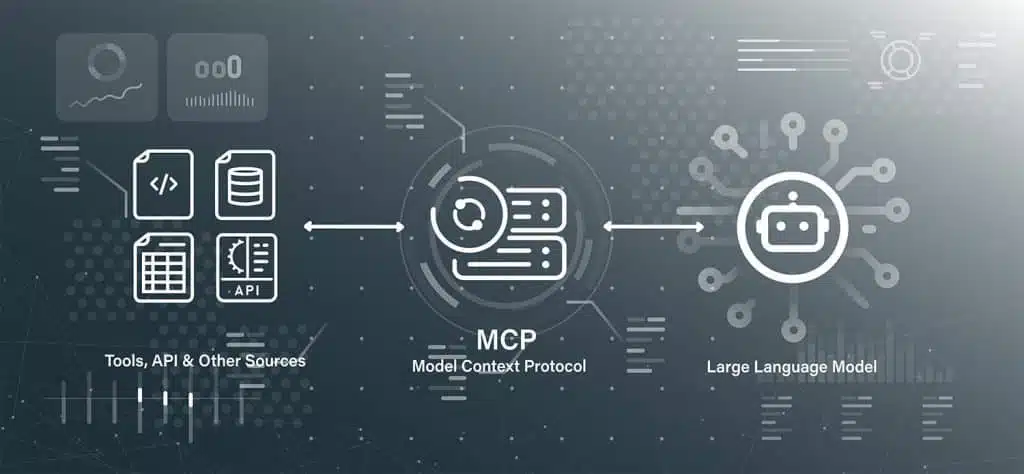
The latest evolutions of the Intelligence Hub introduce capabilities like Model Context Protocol (MCP) services. This allows organisations to securely expose custom data tools and curated pipelines directly to AI agents. It ensures rigid data governance, allowing you to explicitly manage and limit the scope of plant data an AI model can interact with, solving critical security hurdles regarding IP protection and operational integrity.
The Time to Act is Now
The window of opportunity for slow, experimental digital transformation has closed. The differentiator between the market leaders of the next five years and the organisations that fade into irrelevance will be the speed at which they can operationalise data.
Continuing to rely on manual data cleaning, custom integrations and siloed architectures will actively paralyse your AI initiatives. It bloats cloud storage and ingestion costs, stalls deployment timelines from weeks to months and isolates your domain experts from the digital tools they need to optimise production.
By partnering with Novotek and deploying the HighByte Intelligence Hub, you can compress system integration times from months to minutes, eliminate time wasted on broken infrastructure and build an unshakeable, secure data foundation.
Do not let bad data ruin your AI investment. Contact the Novotek team today to establish your Industrial DataOps foundation and unlock the true value of your operational intelligence before the market leaves you behind.